

Meet the founder
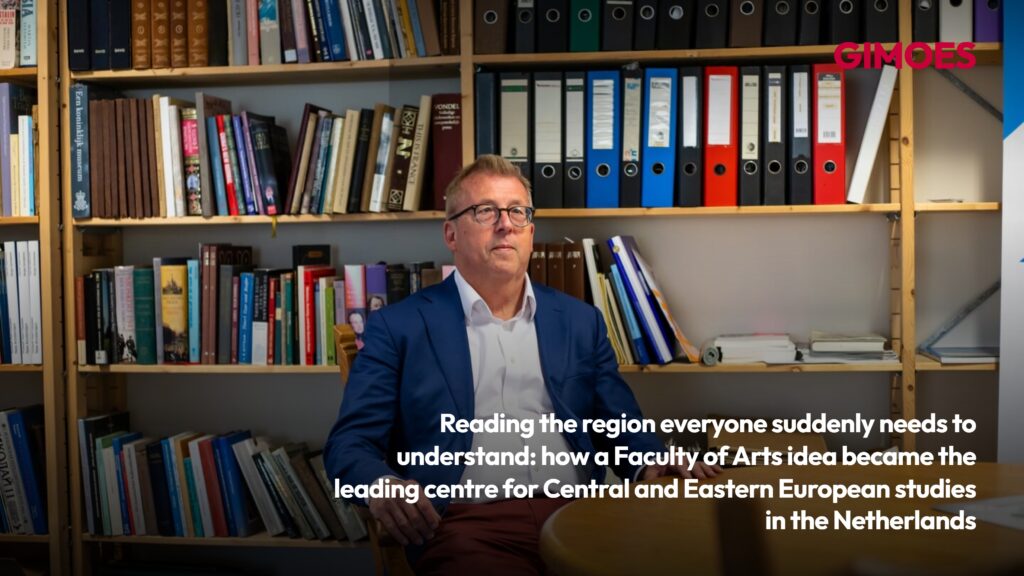
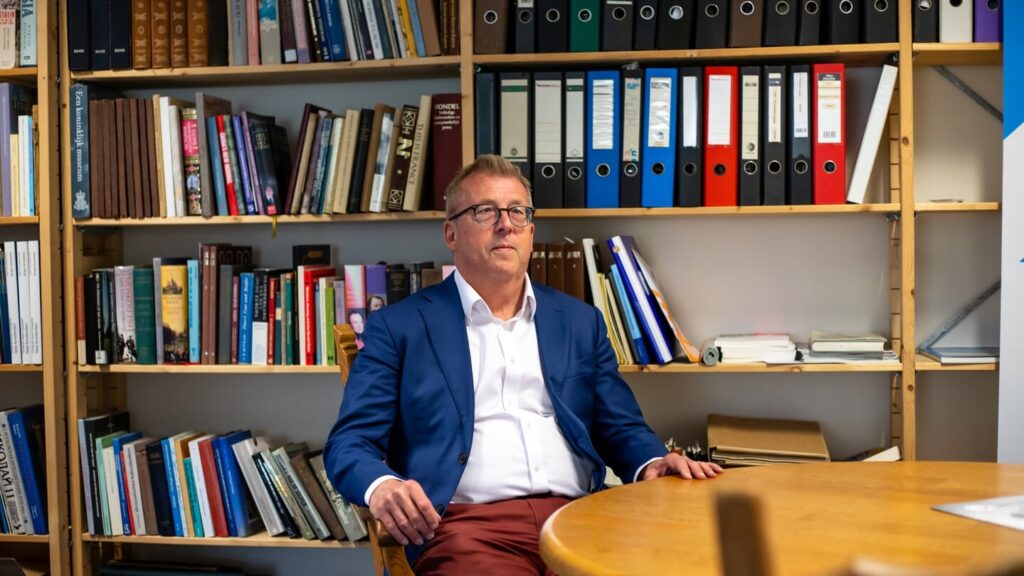
Most academic knowledge stays inside the university. Hans van Koningsbrugge, professor at the University of Groningen, spent his career deciding it should not. He is the driving force behind the Groninger Instituut voor Midden- en Oost-Europese Studies (GIMOES), the institute that brings research on Central and Eastern Europe to students, businesses, government and a broad general public.
For most of the past two decades that was patient, unglamorous work: courses, lectures, publications, business support for companies trading with the region. Then February 2022 changed the conversation. The Russian invasion of Ukraine made it painfully clear how little was generally understood about the politics, history and societies of the region, and how directly developments there land on Dutch doorsteps. Almost overnight, an institute built up quietly over fifteen years became a place the country needed.
The challenge
The hard part was never the knowledge. It was building an organisation around it.
A spin-out from the Faculty of Arts does not fit the usual picture of a university venture. There is no patent, no prototype, no laboratory result to point at. What there is instead is expertise, and expertise on its own does not pay for an office, a website, staff or a course programme. Humanities ventures rarely find an investor who recognises the value of what they are building, which is precisely why so few of them ever get built.
Scaling brings its own tension. The demand created by the war in Ukraine is real, but a course programme grows on reputation and quality, not on headlines. Growing the audience without diluting the academic standard is the balancing act GIMOES faces today.
Where RUG Ventures came in
In 2007, RUG Ventures provided the financing that made it possible to set up the organisation in the first place. Practically, that money paid for the things an institute cannot operate without: a website and proper premises. Structurally, it did something less visible and more important. It allowed an initiative to be built out of the Faculty of Arts at all, in a funding landscape where humanities initiatives rarely qualify for venture capital.
That, for Van Koningsbrugge, is the point. RUG Ventures backs the part of the university that other investors overlook, and it does so at the moment when an idea is still just an idea.
The relationship did not end with the cheque. Almost twenty years on, RUG Ventures remains a strategic sounding board. Plans get talked through together before decisions are made, an outside perspective on questions a founder would otherwise weigh up alone. Van Koningsbrugge describes that sparring as every bit as valuable as the original financing.
Where things stand
GIMOES is now the leading centre for Central and Eastern European studies in the Netherlands. Around 400 people take its courses each year, in Groningen, Leeuwarden, Assen and online, on subjects ranging from the Putin years and the Russian-Ukrainian war to the history of Iran and the pressure on liberal democracy. The ambition is to grow that to 1,000 participants.
The route to that number runs largely through the media. Van Koningsbrugge and his colleagues make roughly 250 media appearances a year: television interviews, including Nieuwsuur, radio, podcasts and columns. He writes a weekly column on the Ukraine conflict in Dagblad van het Noorden and, together with regional media partners, contributes to a weekly podcast on Russia and Ukraine. There is an ongoing collaboration with the magazine Geschiedenis. Each appearance does two things at once: it informs a public that needs the context, and it introduces new people to the institute behind the expert.
Alongside the public programme, GIMOES is an accredited institute for the national interpreter training programme, and it supports Dutch companies doing business in Central and Eastern Europe, the Caucasus and Central Asia with customs, legislation and export subsidies.
In 2007, RUG Ventures provided the financing that made it possible to set up the organisation in the first place. Practically, that money paid for the things an institute cannot operate without: a website and proper premises. Structurally, it did something less visible and more important. It allowed an initiative to be built out of the Faculty of Arts at all, in a funding landscape where humanities initiatives rarely qualify for venture capital.
That, for Van Koningsbrugge, is the point. RUG Ventures backs the part of the university that other investors overlook, and it does so at the moment when an idea is still just an idea.
The relationship did not end with the cheque. Almost twenty years on, RUG Ventures remains a strategic sounding board. Plans get talked through together before decisions are made, an outside perspective on questions a founder would otherwise weigh up alone. Van Koningsbrugge describes that sparring as every bit as valuable as the original financing.
Van Koningsbrugge's advice
Knowledge only has value once it leaves the university. Build the organisation that lets it travel, take the moments when the world is paying attention, and find partners who will think the plans through with you rather than simply fund them.
In a region that keeps demanding our attention, that is the difference between expertise that exists and expertise that reaches people.
Find out more about GIMOES on their website.